Italian Royal Army
M: Son of the CenturyThe Italian Royal Army is presented as the regular military force of the state, most decisively in its December 1920 campaign against Gabriele D’Annunzio’s regime at Fiume. There, its organized assault overcame the legionnaires’ resistance, brought artillery fire into the conflict, and forced D’Annunzio to surrender his powers to the city’s representatives.
State Authority and Wartime Memory
The Army’s presence in the book’s political landscape reaches back to the war that had just ended. In Milan, socialist protesters challenged the authority of uniformed officers who, until the previous day, had ordered them to attack. Their demands for land and amnesty for deserters turned the procession into a repudiation of the military order associated with the war. Benito Mussolini, by contrast, presented himself as a defender of the war dead and threatened to defend them even at the cost of fighting in the city streets. The Army is not shown directing this postwar confrontation, but the opposing claims over its authority and legacy help frame the conflicts that followed.
The Fiume Assault
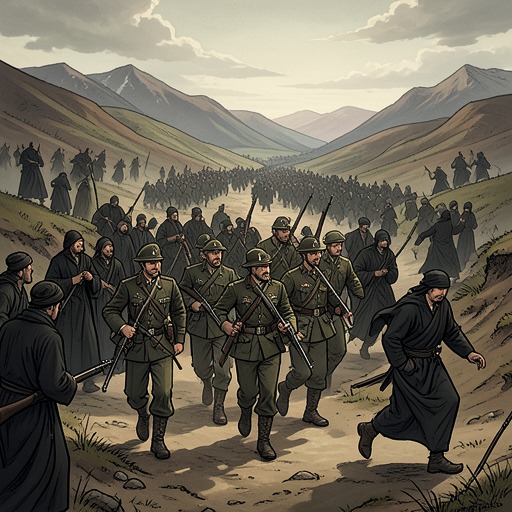
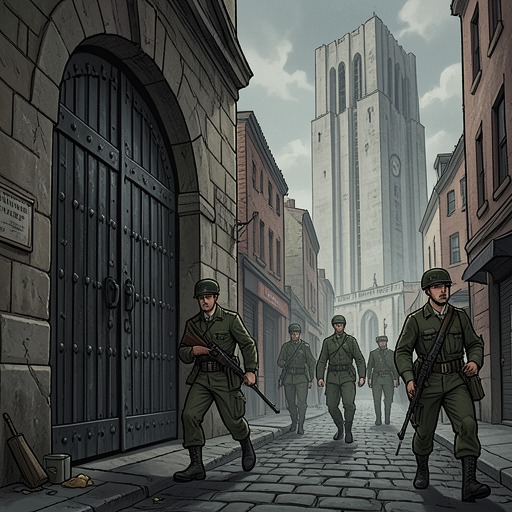
On December 24, 1920, regular troops began an attack on Fiume from several sectors, including the approaches from Val Scurigna to the sea. The legionnaires had been ordered not to engage and retreated toward the city’s last defensive line. Appeals to brotherhood among Italians did not stop the advance. In the command room, D’Annunzio delayed for about an hour before Major Vagliasindi obtained his order to fire; by then, troops advancing near Cantrida had already surrounded and captured the first legionnaire garrisons.
Once D’Annunzio gave the order, his forces reinforced breaks in the line and counterattacked, blunting the surprise assault. By nightfall, they had restored the defensive perimeter. General Ferrario, the army corps commander, ordered a major artillery assault for Christmas Day. Enrico Caviglia, who directed operations, instead imposed a truce until dawn on December 26, leaving the possibility of surrender open for a day.
The renewed attack on December 26, supported by artillery and concentrated on the central sector, again failed to break through. The legionnaires held and counterattacked, capturing a cannon and taking prisoners. By midday, the prospect of entering the city had become one of a potentially extensive massacre. Caviglia then ordered Admiral Simonetti, commanding the battleship Andrea Doria offshore, to fire on military targets in Fiume. During the continuing bombardment, one civilian was killed and several others were wounded.
Surrender and Demobilization
On December 28, as Ferrario refused to negotiate surrender terms and threatened heavier bombing, representatives of Fiume asked D’Annunzio to give up his authority. He transferred the powers granted to him on September 12 to the mayor and the people of the city, saying that he would retain only his courage. The transfer ended his command in the face of the Army’s continuing military pressure.
An agreement signed at Abbazia on December 31 required the legionnaires’ complete demobilization from the city. The Army’s campaign thus concluded not with a negotiated continuation of D’Annunzio’s rule but with the removal of the armed force supporting it. In this episode, the contrast between appeals to national brotherhood and the regular troops’ advance gives the Army a central role in restoring state control by force.